
Liquidity in Forex Trading: Understanding Liquidity Zones Stop Hunts and Market Structure
Introduction
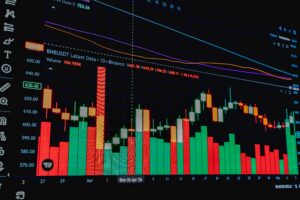
Liquidity is one of the important ideas in financial markets. It has an impact, on how prices change how trades get done and how traders find chances to make money. In Forex trading liquidity means how many buyers and sellers are ready to trade at prices.
Many experienced traders look at liquidity zones to see where a lot of trading happens. These places can affect how the market moves. Can give chances to traders who know how the market works and how prices act.
Liquidity analysis is also connected to Smart Money Concepts which’re about big money moving in the market, where money is stored how the market is set up and where prices are not balanced.
Learning these ideas can help with market analysis even though the text ends here.
What Is Liquidity in Forex Trading?
Liquidity means how easily a financial asset can be bought or sold without making a change in the price that the market shows.
A market that has a lot of liquidity usually has people who want to buy and many people who want to sell which makes it easier to do deals.
A market that has liquidity can happen when there are not many people trading like during times when the market is slow on holidays or when something unexpected happens in the market.
For example when a trader wants to buy or sell something at the price during a time when the market is changing a lot the price they actually get might be different, from what they thought it would be.
Understanding Liquidity Zones
Liquidity zones are price areas where traders believe orders may be concentrated. These areas are often found around highs, lows, support levels, resistance levels and the edges of consolidation zones. Many traders place stop-loss orders at technical levels. When these levels are broken the stop-loss orders get triggered. This can lead to an increase in trading activity, which is why these zones are considered sources of liquidity.
There are commonly discussed types of liquidity.
1. Buy-Side Liquidity

Buy-side liquidity, often called BSL refers to price areas above highs where buy-stop orders are likely to be placed. For example traders who are short may place stop-loss orders above previous swing highs. Breakout traders might also place buy-stop entry orders above resistance levels. When the price moves past these points those orders get filled, creating a surge, in buying pressure.
Understanding Liquidity Zones
Liquidity zones are price areas where traders think orders are likely to be gathered. For instance traders who have positions may place stop-loss orders just above past swing highs. Breakout traders might also set buy-stop entry orders above resistance levels.
When the price moves past these highs some of these orders can get triggered.
Traders who study Smart Money Concepts pay attention to these areas because price movements toward buy-side liquidity can give clues about how the market’s behaving.
The exact location and amount of orders are not shown on regular retail Forex charts.
2. Sell-Side Liquidity
Sell-side liquidity, often known as SSL refers to price areas below support levels or major swing lows where sell-stop orders are likely to be concentrated.
Traders who are long on a position often place their stop-loss orders, below support or previous swing lows.
A liquidity sweep happens when the market goes past a high or low which can trigger orders near that price.
I notice that a liquidity sweep can be quite striking when it occurs.
For example imagine the EUR/USD pair had a swing high at 1.1000.
The price climbs above 1.1000 touches 1.1020 and then quickly drops back below the high.
Some traders might see this move as a sweep of buy‑side liquidity. I find that interesting.
A similar situation can happen below a swing low where the price briefly drops lower before bouncing back.
Liquidity sweeps are often talked about in institutional‑style trading plans.
However moving beyond a high or low does not always mean a reversal and I see it can be a true breakout that keeps going.
Traders should look at market structure how candles close and the overall trend, before deciding to trade.
What Are Stop Hunts in Trading?
The word stop hunt is often used by traders to refer to price moves that set off stop‑loss orders before the price turns back.
For example a trader might set a stop‑loss a little, below a support level. Still it is important to realize that each stop‑loss trigger does not automatically mean there is a manipulation. I notice that many traders jump to conclusions quickly.
Markets move naturally through zones where many orders sit because buyers and sellers react to price changes. Big banks, market makers and other players can shape market liquidity with their trades. Simple chart patterns do not reveal their motives. You might see a lot of activity in these areas without any trickery.
A clearer method is to observe how prices behave near levels instead of assuming that each false breakout is a deliberate trick.
Understanding Smart Money Concepts (SMC)
Smart Money Concepts is a way of analyzing markets that looks at how price moves, where liquidity’s what order blocks are and where fair value gaps appear. It also pays attention to how big players, like institutions move prices. This approach has become popular with traders in the Forex and cryptocurrency markets who rely on price action of indicators.
There are key ideas in SMC that traders use.
Market Structure Shift

A market structure shift happens when the way price moves changes possibly showing that the market is switching from one direction to another. For example a market that has been making highs and lower lows might suddenly start breaking above a key lower high.
Some traders see this as a sign that the market could be turning bullish.. One single price move does not mean a trend has changed. Traders should check the picture. The price structure, around that move and what price does after it. Then can they decide if the shift is real.